
A Transformation of Love Through Time
Dr. Sue Johnson, renowned psychologist, therapist, author, and presenter postulates that throughout time, love is continually transformed. Before modern society as we currently know it, families lived off the land, working farms, and lived in small, close knit community villages. The main reason for marrying during this period of time was to inherit more land, wealth, security, and produce offspring who would eventually take over the farm or family business and care for their parents in old age. The idea of two people coming together because of mutual feelings of love or a deep connection simply wasn’t the case. The focus in this time was on survival and staying within the community, as it provided food, shelter, and protection.
Fast forward past the agricultural age and into the industrial era and a bit beyond and we find that more often that women chose men for financial security. Many women were unemployed and uneducated during this time, so love was not a factor in the equation of relationships or marriage. Again, we see a need for wealth, security, and protection as a principal motivating factor for individuals to join in marriage. Dr. Sue Johnson even states that until the eighties, love as a reason for getting married was about fifth on the list when ranking reasons for marriage.
Fast forward to our present day and the primary reason for relationships and marriage is love. Love, an emotional connectedness so important to the couple that is surpasses all else in our lives and our partners our spouses become our loves, our friends, and our community all in one, placing an important, yet heavy load on the romantic relationship. Gone are the days when we connected with other for our mere survival, or are they? Love, and loving in a mature, adult manner, is about being connected to others as a means of survival, much like that of a newborn infant or small child, whose entire existence depends on the quality of the connectedness and attachment with its parents. As adults, we continue to choose partners based on the desire to survive, through the need for attachment and bonding. We cannot live without relationships. Sure, you might think of yourself as capable of living alone in a remote location somewhere, but even then you would rely on your relationship with others (maybe not human). You would rely on your relationship with plants and animals to feed and clothe you; you would rely on your relationship with the sun to guide you and inform you of directions, time of day, and changing seasons; you would rely on your relationship with water to hydrate and clean you. In today’s capitalist society, we have a relationship with money that puts our orange juice, eggs, and bacon on the table every morning.
Numerous studies have been conducted on orphans, prisoners, and other isolated individuals to study the power behind love, bonding, and connection and conversely, its effects when denied. In early childhood development, attachment is so important that a lack of connection to a secure attachment figure (most likely the mother, father, or other major caregiver) who was reliable and available results in physical alterations to the anatomy and chemistry of the brain, such as reduced brain activity and less developed cortexes.
In our Western society, which can be considered the North and South America, Europe, and Australia or any other country with a heavy European influence, we value the individual and independence. In Eastern societies, like those found in India and much of Asia, family and community are more highly valued than the individual. In both societies, the role of the spouse or partner is above all else and when our partner does something that is hurtful or commits an act of betrayal, our world comes crashing down. If you take these moments of hurt and betrayal that occur daily, weekly, and monthly; however, small and multiply them by days, months, and years, we find that individuals within relationships feel hurt, disappointed, and disconnected. In this way, we are still deeply connected to our ancestral roots of why we choose to engage in a relationship, love, and marry. Dr. Johnson states that love is “a constant process of tuning in, connecting, missing, misreading cues, disconnecting, repairing, and finding a deeper connection. It is a dance of meeting and parting, in finding each other again, minute by minute, day by day.”
In our current time, since our partners and spouses tend to have many roles to fulfill as our partner, lover, friend, etc. couples and marriage counseling is a useful way for us to learn how to maintain that deep level of connection between two people that we crave and seek out to feel whole. Many therapists or counselors who aren’t formally trained in marriage and family therapy tend to help couples create simple solutions to their complex problems, but they don’t really get at the heart of what’s going on within the relationship and work to fix the root of the concern. Some of these simple and often ineffective for the long term solutions might look like creating a budget for a financially struggling couple, or a book on pleasure, a new sex position, or weekend away for a couple whose concern is that their sex live is no longer exciting and taken a turn towards mundane and routine. Although these solutions help in short-term and address the symptom, they fail to create long lasting connection, understanding, change for these couples. Couples often fall victim to a chronic pattern of poor communication that results in feeling criticized, attacked, and defensive. This pattern continues, round and round on a proverbial hamster wheel of arguments with no end in sight. Working with a couples counselor, who is trained in working with couples, will have the experience and knowledge necessary to assist you and your partner in interrupting and changing this poor communication style. For more information on couples counseling, feel free to visit my website www.FamilyAndCouplesCounseling.com and go to the “For Couples” tab. You will find a lot of different information to assist you on your journey!
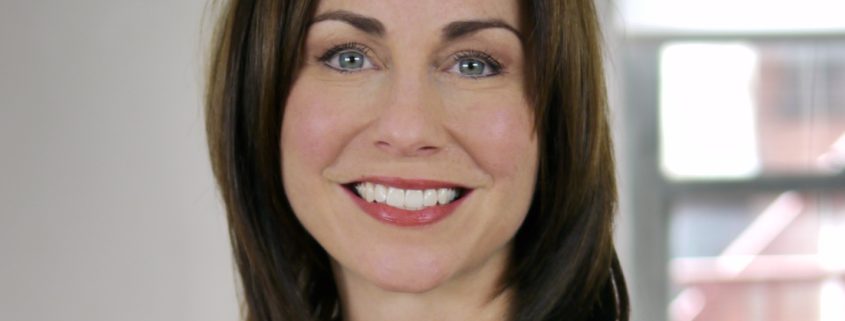
 Marni Feuerman is a Licensed Clinical Social Worker and Licensed Marriage and Family Therapist currently in private practice in Boca Raton, Florida. She has a Master of Social Work degree from Barry University in Miami and is currently pursuing her Doctorate in Clinical Psychology from California Southern University. Marni specializes in couples therapy and relationship issues. She has clinical training in Emotionally Focused Couples Therapy and Discernment Counseling for mixed-agenda couples. Marni is the current marriage expert and content writer for the website About.com. She also writes for several other websites, including YourTango.com, Dr. Oz’s Sharecare.com and PsychCentral.com. Marni is a frequently quoted expert in the media on issues related to marriage, relationships, couples and love.
 Jessica Marchena has a Master of Science in Counseling Psychology and she is a Licensed Mental Health Counselor. She currently maintains a private practice in Boca Raton, FL and is the co-owner of the Heart Connection Center. Jessica has over 20 years of clinical experience working with children, adolescents, families and adults in different treatment settings. Jessica has advanced training in Multi-Dimensional Family Therapy (MDFT), Cognitive Therapy, and Emotionally Focused Couples Therapy (EFT). She is a Florida Qualified Supervisor for LMFT interns. She has had the opportunity to present on various topics as well as train therapists both locally and nationally at various agencies, companies, schools and conferences. Some of these topics include: MDFT, Reconnecting Adolescents with their families, and How ADHD is stressing your marriage, and most recently facilitating a psycho-educational workshop for couples called Hold Me Tight published by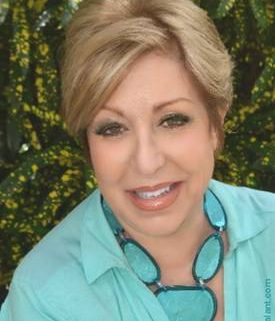
 Michele Landers is a Board Certified Life Purpose Coach and Hypnotherapist and Professional Numerologist. She is a dynamic and gifted lecturer and a teacher on the subjects of self empowerment, Law of Attraction and Numerology. Michele was a recurring coach on Fox ‘s WFLX “Eye on South Florida” with Shannon Cake. Recognized and highly regarded as an authority in her field, her books, The Tao of Numbers and The Year of Living Miraculously are both informative and entertaining. Michele has taught hundreds of classes, speaking throughout the country. She has helped thousands of clients nationwide to gain clarity and direction in their lives and to discover their own unique talent.
 If we take a moment to dissect what your spouse was saying, we’ll actually find the root of the discomfort many men and women feel when the idea of couples counseling is brought up: they’re going to be ganged up on by two others. What they’ve done wrong is going to be the focus of the session and ultimately, one person will lose amongst many other preconceived notions about couples counseling.


 With more than 20 years experience and training as a psychotherapist and clinical sexologist, Dr. Amy has worked extensively with individuals, couples, families and groups helping them get the most out of living. Her office in Coral Springs, Florida where she helps and guides people in areas such as; intimacy concerns, sexual dysfunctions, gender issues, child/teen problems, anxiety, addiction, depression, mood disorders, sexual trauma, attachment disorders, as well as parenting, divorce adjustment, self-esteem and grief issues.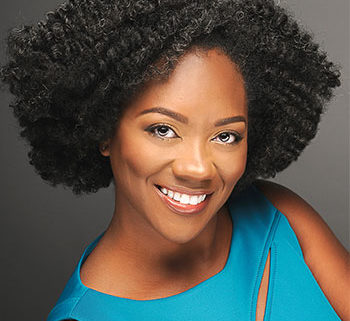
 Dr. Tenille Richardson-Quamina, LCSW is excited to a part of the Couples Corner Show to discuss her passion to stabilize and strengthen relationships by assisting couples in preventing or recovering from online affairs and addictions. She has conducted over eight years of in-depth research and couples therapy specializing in relationship issues caused by the Internet and Social Media. To further assist couples, Dr. Richardson-Quamina developed the “Your Relationship Can Survive the Internet” program which includes online activity contracts, art therapy exercises, online activity rating scales, communication tools and internet addiction assessments and treatment.
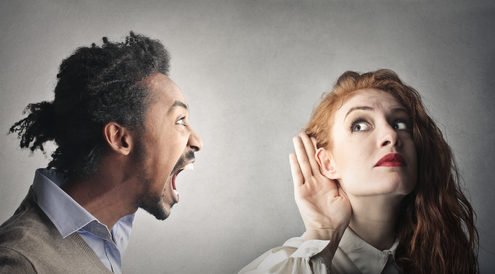 The “I Feel” statement is a classic therapy technique for use when beginning a difficult conversation. This formulaic sentence structure can be used in a variety of situations for a myriad of issues and looks like this: “I feel (insert feelings) when you (insert behavior) because (insert how you’re affected by the behavior).” Ex: “I feel hurt when you came home late because I was really looking forward to spending time with you.” Kept it fact based, don’t generalize, and keep it to a certain situation. Communicating with your partner is this way release him/her from the personal blame which often accompanies arguments and prevents you from attacking by saying something like, “You’re so lazy for never folding the laundry!”